

Key facts
- In most cases, food allergens are proteins. A single food may contain more than one allergenic protein.
- Food allergy affects approximately 1 in 20 children and 2 in 100 adults in Australia and New Zealand.
- 13 foods must be declared on food labels by law in Australia and New Zealand under the Food Standards Code.
- An allergic reaction can occur after eating even a very small amount of the allergen — there is no safe minimum.
- Anaphylaxis is the most severe form of allergic reaction and can be fatal if not treated immediately with adrenaline.
- Food allergy, coeliac disease, and food intolerance are distinct conditions — each requires a different management approach.
What is a food allergen?

An allergy is an overreaction by the body’s immune system to a normally harmless substance. Foods or substances that trigger an allergic reaction are called allergens. In most cases, food allergens are proteins, and a food may contain one or more allergenic proteins.
Food allergies are usually mediated by immunoglobulin E (IgE) antibodies. When a person with a food allergy eats even a small amount of the allergen, their immune system rapidly releases powerful chemicals – including histamine – that cause the symptoms of an allergic reaction. This reaction most often occurs within minutes, though it can take up to two hours after eating.
Avoidance of the allergen is the only way to manage food allergy — there is no cure. Diagnosis should be confirmed by a specialist medical practitioner using clinical tests and patient history.
Why this matters for food businesses…
Incorrect or unclear allergen information on food labels can lead to serious injury or even death. In Australia, undeclared allergens accounted for 44% of all food recalls between 2019 and 2023.
Accurate allergen labelling begins with understanding what allergens are, knowing which ones must be managed and declared, and putting effective processes in place to identify and control them during production.
Symptoms of an allergic reaction
Food allergy symptoms vary in nature and severity between individuals and between exposures. A mild reaction in one instance does not predict a mild reaction next time — reactions can escalate to anaphylaxis.
Mild to moderate reaction
- Swelling of lips, face or eyes
- Hives or welts on the skin
- Tingling in the mouth
- Abdominal pain
- Vomiting
Anaphylaxis — severe and life-threatening
- Difficult or noisy breathing
- Swelling of the tongue or throat
- Wheeze or persistent cough
- Difficulty talking or hoarse voice
- Persistent dizziness or collapse
- Pale and floppy (particularly in young children)
Anaphylaxis
A severe allergic reaction can be fatal if not treated with adrenaline within minutes. Individuals diagnosed with severe allergy are prescribed an adrenaline autoinjector (e.g. EpiPen®) for immediate use while an ambulance is called. A person who has experienced anaphylaxis previously is more likely to experience it again on subsequent exposure.
How common is food allergy?
The Australasian Society of Clinical Immunology and Allergy (ASCIA) estimates that food allergy occurs in around 1 in 20 children and in about 2 in 100 adults
Declared allergens by region
More than 170 foods have been identified globally as potential allergens, but most serious reactions are caused by a smaller group. The following provides guidance on food label declarations depending on the region you are in:
One 2011 Australian study reports that over 10% of 12-month-old infants have food allergy, of which raw egg is 8.9%, peanut is 3.0%, sesame is 0.8% and cow’s milk is estimated at 2.7%.
A 2015 study of hospital admissions in Australia shows that the prevalence of food allergy is increasing in children and teenagers aged 5–14 years, and that there appears to be an increase in food allergy prevalence in Australia, the UK and the United States. Although food allergy is predominantly found in Westernised countries, it is expected that the prevalence will continue to increase globally.
Australia & New Zealand
The Australia New Zealand Food Standards Code requires 13 foods — and their derivatives — to be declared on food labels when present.
Peanuts
One of the most common causes of serious allergic reactions in Australia.
Tree nuts
Includes almonds, cashews, hazelnuts, macadamias, pecans, pine nuts, pistachios and walnuts.
Milk
Milk and products containing milk must be declared.
Egg
Egg and products containing egg must be declared.
Wheat
Wheat and products containing wheat must be declared.
Gluten
Gluten-containing cereals require declaration under the Food Standards Code.
Soy or soybean
Soybeans and products containing soy must be declared.
Fish
Fish and products containing fish must be declared.
Crustacea
Includes prawns, crabs, lobsters and related species.
Molluscs
Includes oysters, mussels, squid and related species.
Sesame seeds
Sesame and products containing sesame must be declared.
Lupin
Lupin and products containing lupin must be declared.
The full list of required names for declaring each allergen, and the allergen labelling exemptions for certain processed or refined ingredients, are set out in Schedule 9, table to section S9-3 of the Code. Always refer directly to the current Code — requirements are updated periodically.
Europe
Refer to current European Union food-information regulations for the required allergen declarations.
Asia
Requirements vary by jurisdiction. Confirm the current rules for the market where the food will be sold.
USA
Refer to current United States FDA requirements for major food allergen declarations.
Food allergy, coeliac disease and food intolerance – what’s the difference?
These three conditions are frequently confused but are medically distinct. Each requires a different management approach from food businesses.
| Condition | Immune system? | Life-threatening? | Management | For food businesses |
|---|---|---|---|---|
| Food allergy | Yes – IgE-mediated immune response | Yes anaphylaxis can be fatal | Complete avoidance of the allergen | Mandatory allergen declaration and allergen management |
| Coeliac disease | Yes — different immune mechanism (not IgE) | Not immediately, but causes serious long-term intestinal damage | Strict lifelong gluten-free diet | Mandatory allergen declaration and allergen management If considering making Gluten free claims ensure you understand the labelling laws in the market you are selling. These claims require strict controls and accurate validation and controls. |
| Food intolerance | No | Not typically | Reducing or avoiding the trigger food | e.g. sulphite Mandatory allergen declaration may be required Claims may be subject to nutrition content regulations |
💡 Important distinctions
Wheat allergy and coeliac disease are both serious, but are not the same.
Although wheat contains gluten, an individual can be allergic to wheat but not allergic to other cereals that contain gluten. Food businesses must understand this distinction when preparing labels and responding to customer allergen enquiries.
Milk allergy and lactose intolerance are not the same.
Lactose‑free products remove the sugar (lactose) but still contain milk protein—so they are not safe for people with milk allergy and must still be labelled as milk.
Sulphites are not true food allergens.
They are minerals added to foods for technical purposes, such as preservation. However, they can still cause adverse reactions in some people and must be declared on labels in many jurisdictions when present above specified thresholds.
In your workplace – foundation questions
These practical questions are for food business operators to apply in their own operations.
- Can everyone in your business name the allergens that must be declared in the market your product is sold in? If your customer service, production, or labelling staff cannot list them, allergen management training is a priority.
- Do your staff understand the difference between food allergy, coeliac disease, and food intolerance? Confusing these conditions can lead to in effective controls or incorrect responses to customer allergen enquiries.
- If a customer contacts you to report a suspected allergic reaction to one of your products, do you have a documented process to respond? This is a legal obligation in many markets. See the Food Recalls and Allergen Incidents topic page.
- Are your new starters — including casual, part-time, and contract staff — receiving allergen awareness training as part of their induction? Allergen incidents frequently involve new or temporary workers.
The blocks below is Lynsey testing the new blocks
This is a heading within an emphasis block when filled I can add an icon
This is the body of the empahsis block where we can put the text I can use bold italic etc as well as add links. This is a default block
This is a success block which is green
This is the body of the empahsis block where we can put the text I can use bold italic etc as well as add links. This is a default block. Don’t always need to use icons
This is the text on the accordian
you can add blocks within this space such as images

Below os a Call to Action CTA block – these are sitewide blocks that we can set up and then include in the top page for key call out – become a member for example, access the service directory, find a VITAL trainer etc.
Not sure where to start?
With one membership, become a part of a trusted standard, a global network, and get access to discount that pays for itself.
This is a checklist
This is a stages block
This is the sub title RISk rview
Step 1 assess you cleaning processes
This s where you can put you text not sure if i can bold etc.
I can do new paragraphs.
I can add lins to we can jump to dedicated pages
This is the sub title RISk rview
Step 2 meet your supplier
This s where you can put you text not sure if i can bold etc.
I can do new paragraphs.
I can add lins to we can jump to dedicated pages
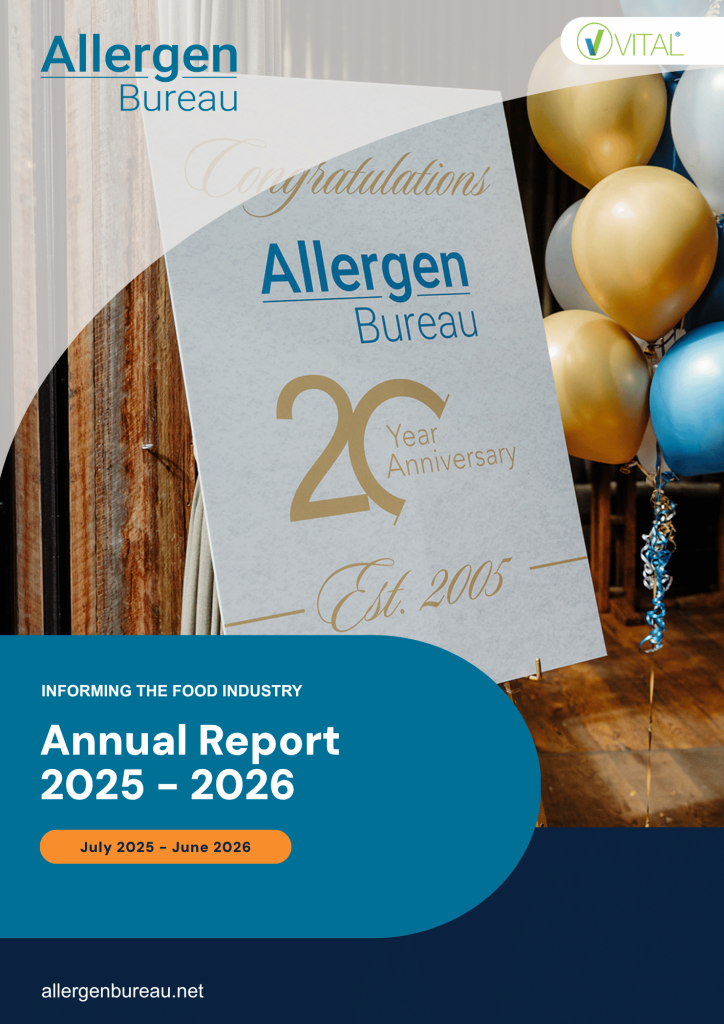
Allerge Bureau Annual Report 2025 – 2026
A summary of the work undertaken by the Allergen Bureau across 2025 – 2026. Discover how we have advanced against all stages of our strategic plan.
The block above is a resource block
The block below is a horizontal card
This is the tile of a horizontal card
This is the description we can add. We can’t add bold etc