

Collaboration with our partners is key to our success
Food allergen safety doesn’t stop at the factory gate, so neither does our collaboration. We work closely with Australia’s leading food allergy health and consumer organisations, so the guidance we give industry lines up with the advice people living with food allergy are already getting from their health professionals, clinicians and support networks.
Allergy & Anaphylaxis Australia
Allergy & Anaphylaxis Australia (A&AA is a registered charity and Australia’s only national patient support organisation, dedicated to helping individuals and carers alike in managing allergic disease. running the National Allergy Helpline, food alerts, and education for consumers, carers and health professionals.
Our ongoing engagement with A&AA keeps consumer experience at the centre of our industry guidance, and helps us speak with one voice on food allergen risk.
National Allergy Council
The National Allergy Council (NAC) is a partnership between the Australasian Society of Clinical Immunology and Allergy (ASCIA) and Allergy & Anaphylaxis Australia, funded by the Australian Government to deliver the National Allergy Strategy and improve the lives of the eight million Australians living with allergy.
We partner with the NAC to co-develop resources and training for small and medium food businesses, and to keep our industry guidance aligned with national clinical and public health priorities.
FSANZ
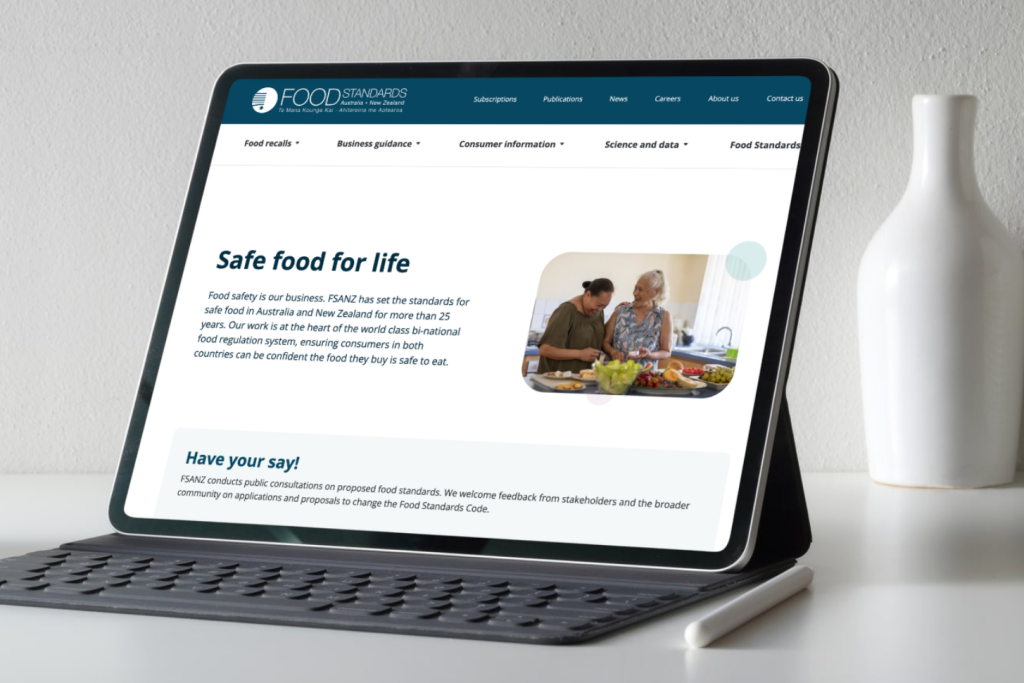
Food Standards Australia New Zealand (FSANZ) is an independent statutory agency established by the Food Standards Australia New Zealand Act 1991 (FSANZ Act). FSANZ is part of the Australian Government’s Health portfolio.
In 2022, a cross-sector working group led by the National Allergy Council launched the Consensus Statement, a world-first benchmark for advocacy and best practice in allergen management, agreed across industry, health and consumer groups.
In 2025, that working group, which we’re proud to be part of, updated the Statement to reflect the adoption of the ED05 Reference Dose in VITAL® 4.0, sharpening what precautionary allergen labelling means and who’s responsible for what.
The updated Statement now sets out the specific responsibilities of:
- Healthcare professionals
- Food safety regulators and enforcement agencies
- Consumers, packaged food manufacturers and food service businesses
It’s a rare example of genuine alignment: industry, health and consumer groups backing the same approach to protecting consumers with food allergy, and one we hope becomes a model for other countries working through the same challenges.
VISIT FZANZLooking forward
The Allergen Bureau will continue to support industry and the consumer as we move towards global harmonised risk management and allergen labelling, with a renewed focus on education for the industry and consumers about the industry.
Jasmine Lacis-Lee, Allergen Bureau Chair